Recently, the collecting community has been buzzing! It’s not just one rare coin fetching high prices, but three types of Guangxu Yuanbao coins have collectively surged in popularity at auctions, each selling for over 1.9 million, with an average price firmly above that mark. Many collectors are lamenting, “I missed out on a fortune!” or thinking, “Just one could change my life!”
When many people think of Guangxu Yuanbao, their first reaction is often, “I think I have some at home,” or, “Aren’t they just old copper coins left by ancestors?” Some even toss them into drawers or the bottoms of old boxes, or sell them as scrap copper for just a few dozen yuan per pound, wasting what could be a windfall.
However, it’s important to note that while common Guangxu Yuanbao coins might only be worth a few hundred or thousand yuan, these three specific types, due to their rarity, exquisite minting craftsmanship, and rich historical background, have become “hard currency” in the collecting world. They not only sell well but their prices have skyrocketed, each fetching over 1.9 million, making them the pinnacle of Guangxu Yuanbao coins.
Today, I will introduce you to these three “high-value Guangxu Yuanbao coins,” each averaging over 1.9 million, packed with useful information including detailed appearance identification, historical context, and real auction records. Whether you are a novice collector or a seasoned expert, this article will help you easily discern whether the Guangxu Yuanbao in your possession could be a “treasure” that changes your fortunes overnight!
Let’s start with a core conclusion: the value of Guangxu Yuanbao is not determined solely by the name “Guangxu”; it hinges on three key factors: the mint, the quantity in existence, and the condition. The three types of Guangxu Yuanbao that can fetch over 1.9 million are either extremely rare versions with very low mintage, or they are in perfect condition, or they come from special mints. All three factors are essential. Especially during the late Qing Dynasty’s Self-Strengthening Movement, the machine-made Guangxu Yuanbao combined Western minting technology with traditional Chinese culture, making them highly sought after; once they appear, they are sure to trigger a buying frenzy.
Without further ado, let’s reveal these three types of “average price over 1.9 million” Guangxu Yuanbao coins, examining their rarity, distinguishing features, and how to identify them. Perhaps the coin you have is the next potential high-value item!
01 Beiyang Mint Guangxu Yuanbao 10 Wen (Sold for 1.92 million): A Strong Contender from Beiyang Mint
Among these three high-value Guangxu Yuanbao coins, the Beiyang Mint Guangxu Yuanbao 10 Wen is the most well-known among collectors and is currently one of the hottest-selling Guangxu Yuanbao coins on the market. Recently, at a major coin auction, a high-quality Beiyang Mint Guangxu Yuanbao 10 Wen was successfully sold for 1.92 million, setting a new record for similar Guangxu Yuanbao coins and making many collectors envious.
Let’s start with its historical background: the Beiyang Mint Guangxu Yuanbao was produced by the Beiyang Mint during the Qing Dynasty, which held a significant position in the late Qing period, primarily responsible for minting both silver and copper coins. Among these, the mintage of copper coins was relatively high, and most ordinary Beiyang Mint Guangxu Yuanbao copper coins have low collectible value, typically selling for only a few hundred or thousand yuan, making it difficult to fetch high prices.
However, the Beiyang Mint Guangxu Yuanbao 10 Wen we are discussing today is not an ordinary circulating copper coin; it is a rare trial minting version with an extremely low mintage. After nearly a century, very few have been preserved intact, which is one of the core reasons it can fetch a price of 1.92 million. Moreover, its minting craftsmanship is considered the “pinnacle” of late Qing machine-made copper coins, with every detail exquisitely handled, exuding a “royal quality.”
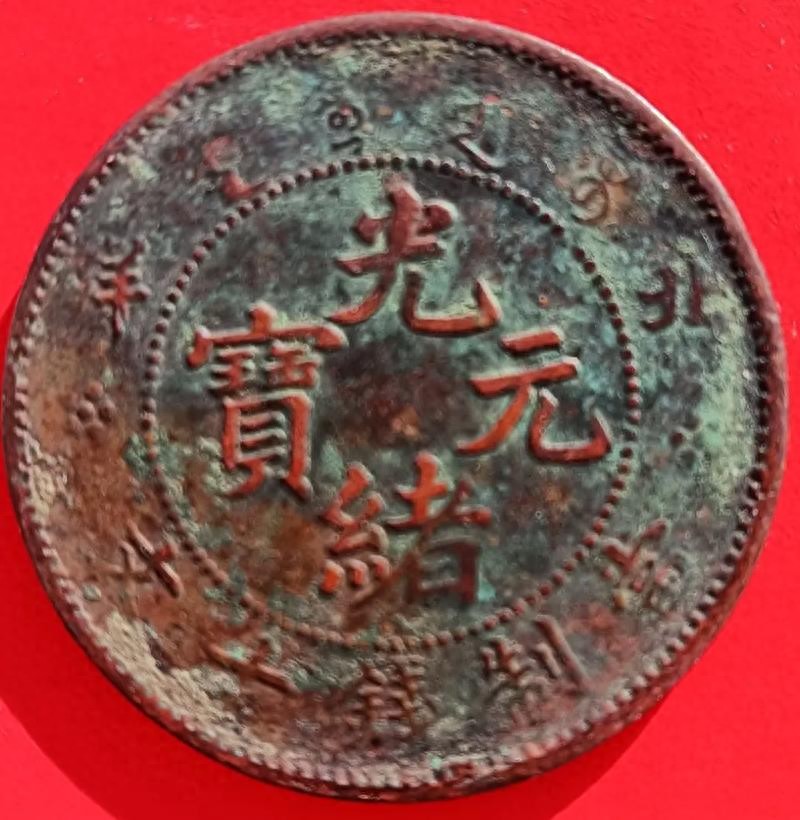
Its appearance features are very distinct and easily recognizable, even for novice collectors:
First, let’s look at the front: the text on the coin is raised, with rounded and deep strokes, showing no signs of blurriness or adhesion. In the center, the four characters “光绪元宝” (Guangxu Yuanbao) are prominently displayed in a dignified and balanced regular script. Surrounding the text, the words “北洋造” (Beiyang Mint) are clearly inscribed, marking its mint, which is a core identifier distinguishing it from other Guangxu Yuanbao coins. The edge of the coin has regular decorative patterns, with delicate lines and no burrs or flaws, presenting a solemn and grand design.
Now, let’s examine the back: the most eye-catching feature is the coiled dragon design, with the dragon’s body curled up, its eyes bright and seemingly gazing into the distance. The scales are closely arranged, and the pearl patterns are distinct, with each scale clearly visible and no signs of blurriness or deformation. The dragon’s claws are prominent and powerful, embodying the dragon’s majesty, symbolizing the people’s hopes for favorable weather and national peace during the late Qing period. The edge of the coin has standard rim teeth, which are raised and clear, with a smooth surface, showing no signs of wear or scratches, highlighting its perfect condition.
Some may wonder: I also have a Beiyang Mint Guangxu Yuanbao; how can I tell if it’s this valuable 1.92 million treasure? It’s quite simple; just remember two key points to easily distinguish it and avoid pitfalls:
First, check the version and mintage: ordinary Beiyang Mint Guangxu Yuanbao copper coins have a large mintage and many in existence, making them low in price; while this 1.92 million coin is a rare trial minting version with extremely low mintage and few surviving examples, most of which have distinct trial minting characteristics—more exquisite craftsmanship, clearer text, and no signs of circulation, resulting in excellent condition.
Second, examine the condition and details: genuine coins have an aged patina, presenting a warm deep brown color formed by natural aging. If you scratch it lightly with a fingernail, it won’t lose color or flake off, and the luster is soft and not glaring. The text is raised, the dragon pattern is clear, the rim teeth are standard, and the surface is smooth with no wear or scratches, showing no signs of artificial polishing or aging. In contrast, counterfeit coins often have artificially aged patinas that look unnatural, with blurry text and rough dragon patterns, making them easy to identify.
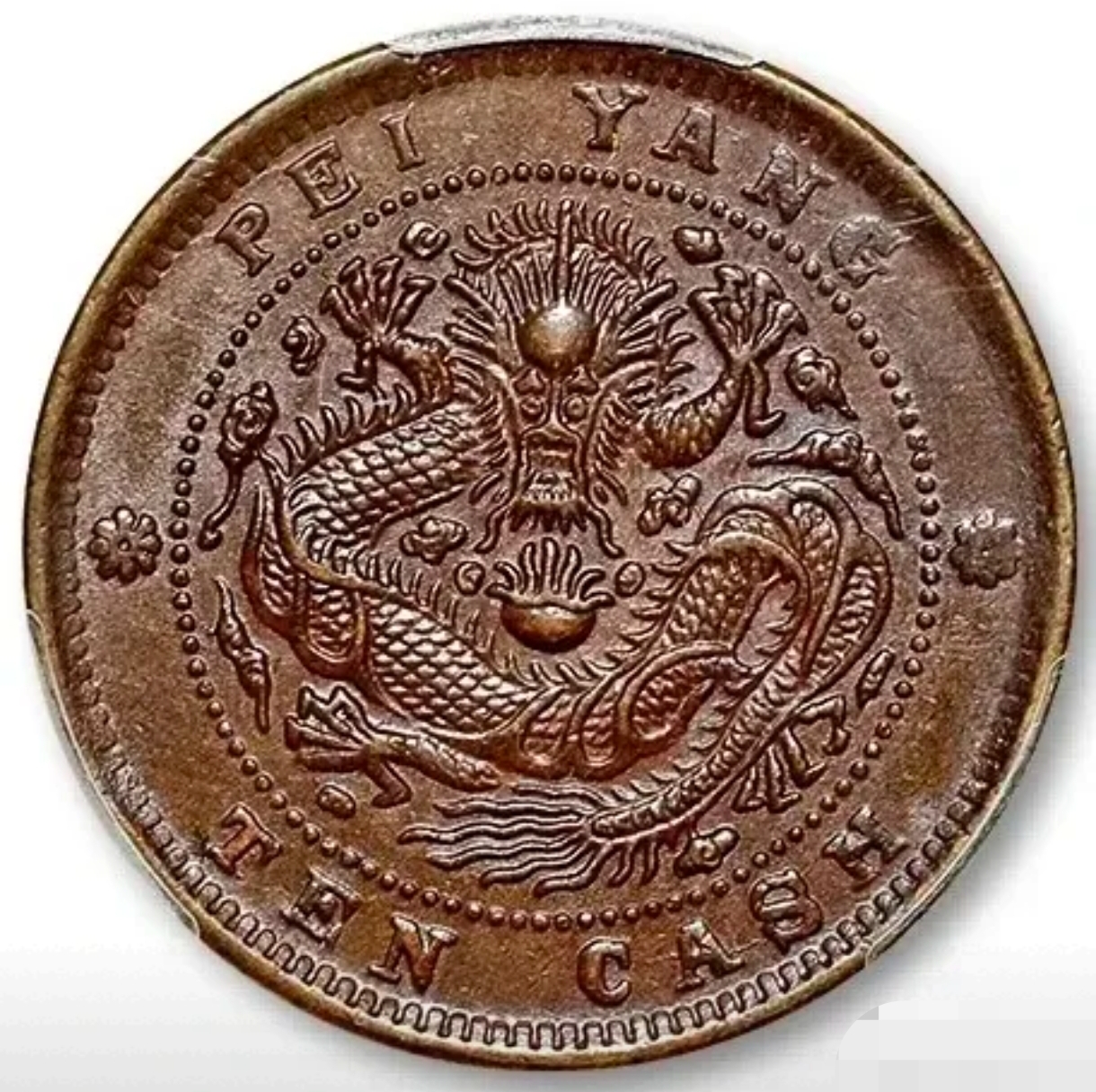
It’s important to remind everyone that while Beiyang Mint Guangxu Yuanbao is common, this trial minting 10 Wen is extremely rare. Currently, there are many unscrupulous merchants in the market who use ordinary Beiyang Mint copper coins, artificially age them, and counterfeit details to pass them off as this trial minting version, deceiving novice collectors into purchasing. Many novices, lacking identification skills, end up spending a lot of money only to find they bought counterfeit coins, losing their investments. Everyone must stay vigilant, carefully distinguish, especially when encountering coins priced too high or in overly “perfect” condition; always seek authoritative appraisal before purchasing or collecting.
The 1.92 million Beiyang Mint Guangxu Yuanbao 10 Wen also has a touching story behind it. Its previous owner, an 89-year-old gentleman from Tianjin, inherited this coin from his grandfather. He shared that his grandfather was a craftsman at the Beiyang Mint and participated in the minting of this trial version. Due to wartime chaos, he took this coin with him when fleeing Tianjin, and since then, it became a family heirloom.
For decades, the gentleman carefully treasured this coin, never daring to take it out, nor did he think it would be valuable. Until last year, as his health declined, he worried about losing this coin, prompting him to have his son consult with professional collectors. To his surprise, this seemingly ordinary copper coin turned out to be a rare treasure, with a market value exceeding 1.9 million.
Later, following expert advice, the gentleman and his family decided to send the coin to a major auction, where it ultimately sold for 1.92 million. Reflecting on the auction proceeds, the gentleman expressed deep emotions: “My grandfather worked diligently throughout his life, dedicating so much to his craft. He never imagined that a small coin he minted decades ago could sell for such a high price. I will use this money to support impoverished students, fulfilling my grandfather’s wish.”
02 Jilin Mint Guangxu Yuanbao Each Yuan Equivalent to Ten Cash (Sold for 1.95 million): A Rare Brass Version, Perfect Condition
If the Beiyang Mint Guangxu Yuanbao 10 Wen is the “strong contender,” then this Jilin Mint Guangxu Yuanbao Each Yuan Equivalent to Ten Cash is the “dark horse treasure” in the collecting community. It sold for a higher price than the Beiyang Mint Guangxu Yuanbao 10 Wen, fetching 1.95 million, and its mintage is even rarer than the Beiyang Mint trial version, making it one of the best-selling and most scarce Guangxu Yuanbao coins on the market.
Let’s discuss its basic information: this Guangxu Yuanbao, fully named “Jilin Mint Guangxu Yuanbao Each Yuan Equivalent to Ten Cash,” is made of brass and belongs to the rare version of Guangxu Yuanbao from Jilin Mint. Many may not know that the Jilin Mint Guangxu Yuanbao equivalent to ten cash had a very large mintage, so most ordinary versions of Jilin Mint Guangxu Yuanbao equivalent to ten are not highly collectible, typically worth only a few thousand to tens of thousands of yuan, making it difficult to sell for high prices.
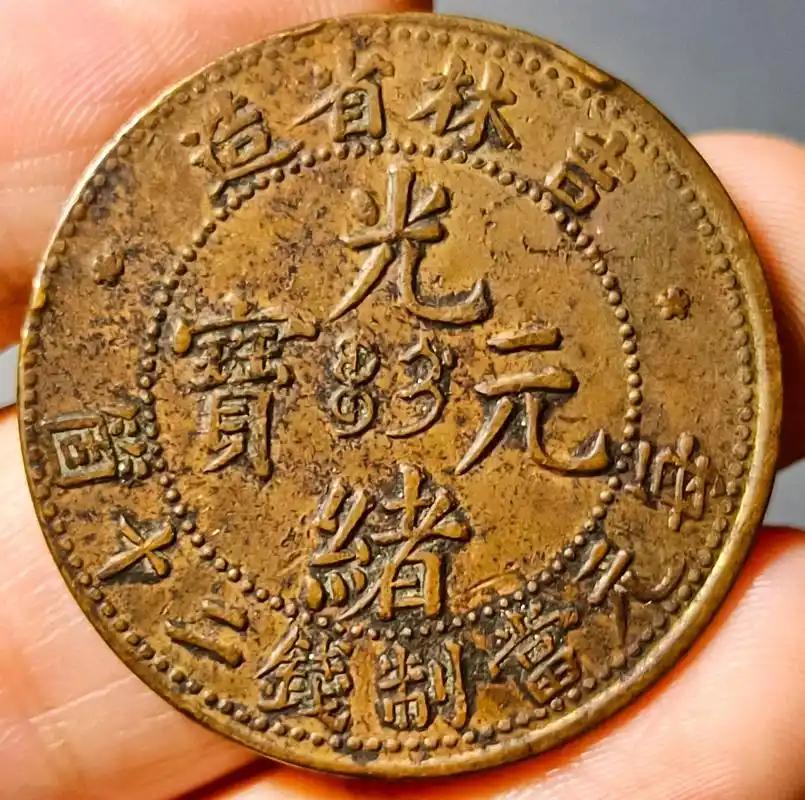
However, the coin we are discussing today is an extremely rare brass version, and it is in perfect condition, classified as an exquisite piece, which is the core reason it can fetch a price of 1.95 million. During the late Qing period, most Jilin Mint Guangxu Yuanbao were made of red copper; the mintage of brass versions was extremely low, with only a few trial minting samples produced and no large-scale issuance. Very few have survived intact, making it a true rarity.
Now, let’s look at its appearance features, which are also highly recognizable and carry a unique style:
The front design is simple and dignified, with the four characters “光绪元宝” (Guangxu Yuanbao) prominently displayed in the center, featuring a robust and regular font arranged in a circular pattern. The text is in regular script, with clear and smooth strokes, showing no signs of blurriness or adhesion. Above the text, the words “吉林省造” (Jilin Mint) are clearly inscribed, marking its mint; below the text, it states “每元当制钱十个” (Each Yuan Equivalent to Ten Cash), clearly indicating its face value, with harmoniously arranged fonts. The edge of the coin has a circle of neat decorative patterns, with delicate lines and no signs of disorder. The brass material, aged over time, exudes a warm luster, showcasing its quality.
The back design combines traditional Chinese dragon culture with Western minting technology, featuring a vividly coiled dragon in the center. The dragon’s body is curled, its scales are closely arranged and clearly visible, and its mouth is open, seemingly roaring, with sharp eyes and a majestic presence. Surrounding the dragon pattern is a circle of regular decorative patterns, with smooth lines and no burrs or flaws, embodying both the charm of traditional Chinese motifs and the finesse of Western craftsmanship, resulting in a harmonious and aesthetically pleasing overall design with significant artistic value.
Moreover, this coin’s patina is natural, formed over nearly a century, presenting a warm brownish-yellow color with a sheen from aging, showing no signs of artificial aging. The base is clean, with no wear or scratches, and the text and dragon pattern are clearly visible, making its condition “perfect.” This is also a crucial reason it can fetch a high price of 1.95 million at auction—“condition is king” in the collecting community. No matter how good the type, if the condition is poor, its value will drop significantly, possibly from 1.9 million to tens of thousands or even lower. Conversely, even an ordinary circulating Guangxu Yuanbao can be worth significantly more if it is in good condition, potentially selling for thousands or tens of thousands.
In the current ancient coin collecting market in China, Jilin Mint Guangxu Yuanbao is not hard to find, but this rare brass version in perfect condition is quite scarce. Many seasoned collectors may spend their entire lives without acquiring one, which is why it has become a coveted item in the collecting community.
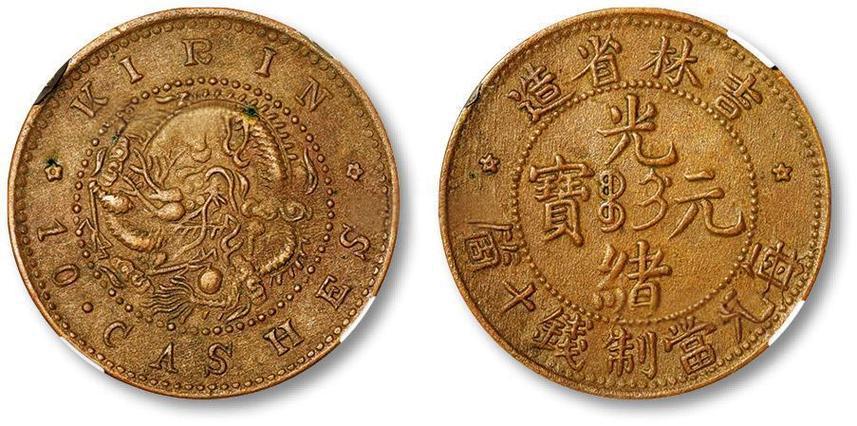
This 1.95 million Jilin Mint Guangxu Yuanbao was discovered by a collector from Changchun, Jilin, at an antique exchange event. This collector has been deeply involved in the collecting community for over a decade, focusing on collecting late Qing Guangxu Yuanbao. A few years ago, at a small antique exchange, he spotted this coin tucked away in an inconspicuous corner, covered in dust. Many people thought it was just an ordinary Guangxu Yuanbao and overlooked it.
However, this collector, with years of experience, immediately recognized its uniqueness—its brass material, natural patina, perfect condition, and rarity as a Jilin Mint version. He quickly picked it up, carefully examined it, and confirmed it was genuine and an exquisite piece. He then negotiated a price with the seller and ultimately acquired the coin at a reasonable price.
Later, this collector took the coin to a reputable coin appraisal agency, where experts meticulously evaluated it, confirming that it was the Jilin Mint Guangxu Yuanbao Each Yuan Equivalent to Ten Cash brass version, extremely rare, in perfect condition, and possessing high collectible value and historical significance, with a market estimate exceeding 1.9 million.
At a major auction this year, the collector sent the coin for auction, and after several rounds of intense bidding, it ultimately sold for 1.95 million, multiplying his initial purchase price many times over. The collector reflected, “The joy of collecting lies in the moment of discovering treasures. I have carefully treasured this coin for years, and never expected it could fetch such a high price. This is not just wealth; it’s a recognition of my years of collecting experience.”
For novice collectors, distinguishing this Jilin Mint Guangxu Yuanbao brass version is quite simple; just remember two key points:
First, check the material and mint: genuine coins are made of brass, with a warm color and natural patina; the front clearly states “吉林省造” (Jilin Mint), with clear and regular font, showing no signs of blurriness or slant. Ordinary Jilin Mint Guangxu Yuanbao are mostly made of red copper, with a larger mintage and lower value.
Second, examine the condition and details: genuine coins are in perfect condition, with a clean base, no wear or scratches, and clear text and dragon patterns, with natural patina and no signs of artificial aging. Counterfeit coins are often red copper fakes, artificially aged, with unnatural patina, blurry text, and rough dragon patterns, making them easy to identify.
03 1902 Anhui Mint Guangxu Yuanbao 20 Wen Copper Coin (Sold for 1.96 million): The Rarest Among Provincial 20 Wen Coins
Among these three high-value Guangxu Yuanbao coins, the one with the highest sale price is the 1902 Anhui Mint Guangxu Yuanbao 20 Wen copper coin, which sold for 1.96 million, becoming the best-selling and most expensive Guangxu Yuanbao coin, and the rarest and most precious among the 20 Wen coins from various provincial mints, making it the “price ceiling” for Guangxu Yuanbao.
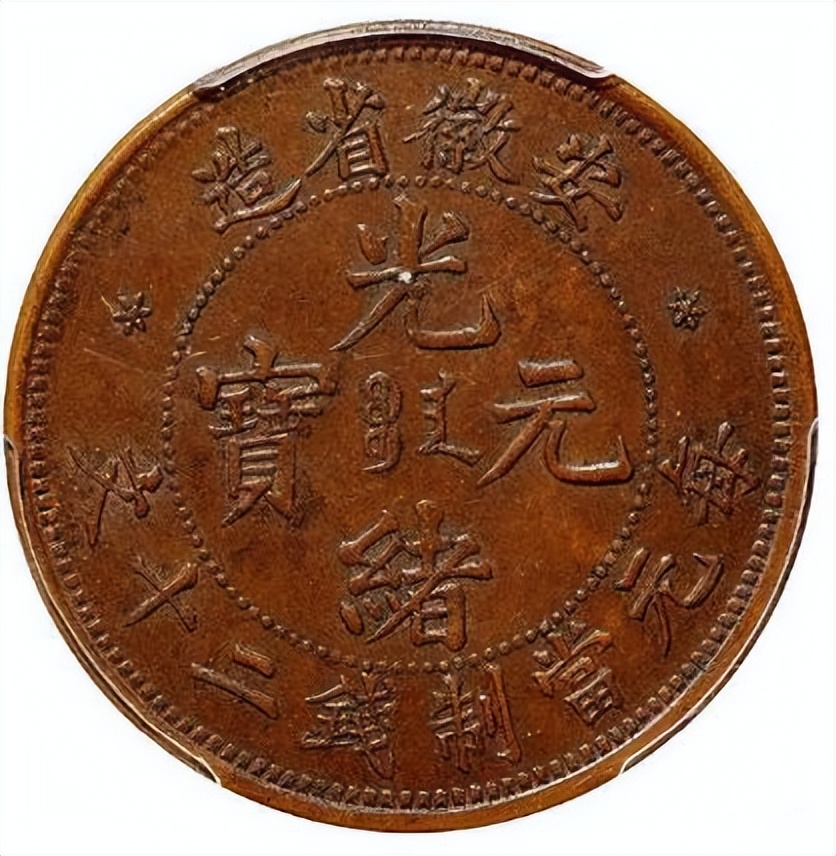
Let’s discuss its historical background: this Guangxu Yuanbao was minted in 1902 (the 28th year of Guangxu) by the Anhui Mint, and it is a circulating copper coin with a face value of 20 Wen, equivalent to twenty ordinary 1 Wen copper coins, primarily used for local circulation in Anhui Province during the late Qing period. However, many may not know that the Anhui Mint 20 Wen Guangxu Yuanbao has the lowest mintage among the 20 Wen coins from various provincial mints, making any version of the Anhui Guangxu Yuanbao 20 Wen extremely rare, with high collectible value and market price.
During the late Qing period, silver coins, paper currency, and copper coins coexisted. By the Jiaqing period, new-style silver dollars began to be issued, and during the Guangxu period, more gold and silver coins were minted. The rise of the Self-Strengthening Movement also impacted the minting industry. Zhang Zhidong, the governor of Guangdong, commissioned the purchase of a complete set of minting machines from England in the 13th year of Guangxu (1887), and the Guangdong Mint was the first to mint machine-made silver and copper coins. Subsequently, various provinces followed suit, purchasing foreign machinery to mint silver and copper coins, leading to the establishment of the Anhui Mint under this backdrop.
Notably, many of the minting machines, including those from the Guangdong Mint, were ordered from the famous Birmingham Mint in London, England. The involvement of British industrialization infused this Guangxu Yuanbao with Western characteristics—its front visibly showcases the fusion of Manchu and Han cultures, while the back clearly indicates the influence of Western culture. This blend of Chinese and Western design is a significant hallmark of the late Qing currency reform, adding to the collectible value and historical significance of this Guangxu Yuanbao.
This 1902 Anhui Mint Guangxu Yuanbao 20 Wen copper coin is extremely rare, and it is an exquisite piece with superb minting craftsmanship, with every detail exquisitely handled and very distinct appearance features. Let’s take a closer look:
The front design incorporates Manchu and Han cultures, prominently displaying the four characters “光绪元宝” (Guangxu Yuanbao) in the center, with a robust and regular font arranged in a circular pattern. The text is in regular script, with dignified and balanced strokes, clear and smooth, showing no signs of blurriness or adhesion. Above the text, the words “安徽省造” (Anhui Mint) are inscribed, marking its mint; below the text, it states “当制钱二十文” (Equivalent to Twenty Cash), clearly indicating its face value. On either side of the text, there are symmetrical decorative patterns with delicate lines and no burrs or flaws. The edge of the coin has regular rim teeth, with clear granules and a smooth surface, showcasing exquisite craftsmanship.
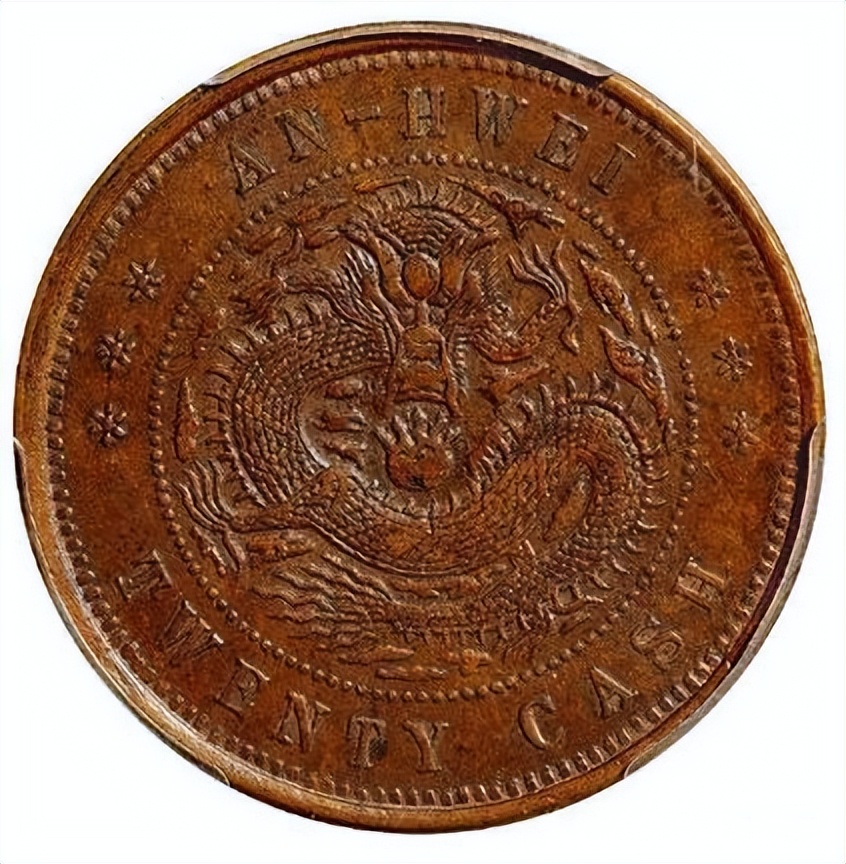
The back design prominently features Western cultural elements, with a vividly coiled dragon in the center. The dragon’s body is curled, its scales closely arranged and clearly visible, with its mouth open and sharp eyes, showcasing its majesty. Surrounding the dragon pattern is a circle of English inscriptions indicating the minting information. This blend of Chinese and Western design is rare among Guangxu Yuanbao coins, making this coin unique and valuable for collectors. The coin’s patina is natural, presenting a warm deep brown color formed by aging, with no signs of artificial aging, and it is in perfect condition, showing no wear or scratches.
This 1.96 million Anhui Mint Guangxu Yuanbao 20 Wen copper coin has a legendary story behind it as well. Its previous owner is an elderly gentleman from Hefei, Anhui, who inherited this coin from his great-grandfather. The gentleman shared that his great-grandfather was an official at the Anhui Mint, and after the minting of this Guangxu Yuanbao in 1902, he was fortunate enough to receive a trial sample, which has been carefully preserved and passed down through generations as a family heirloom.
For decades, the gentleman’s family has treated this coin as their most important treasure, carefully preserving it without ever taking it out or considering its value. Until last year, when the gentleman’s grandson stumbled upon a video online about old coin collecting, he saw a coin identical to theirs and realized that this coin, which had accompanied their family for nearly a century, was actually a rare treasure.
Later, the gentleman took the coin to a reputable coin appraisal agency, where experts carefully evaluated it and confirmed that it was the 1902 Anhui Mint Guangxu Yuanbao 20 Wen copper coin, extremely rare, an exquisite piece, with superb minting craftsmanship, possessing high collectible value and historical significance, with a market estimate exceeding 1.95 million.
At a major auction this year, the gentleman and his family decided to send the coin for auction, ultimately selling for 1.96 million, making it the highest priced among the three high-value Guangxu Yuanbao coins. Upon receiving the auction proceeds, the gentleman remarked, “This coin carries our family’s memories and a piece of late Qing history. Its high price is a recognition of its value and a testament to our family heritage. We will use this money to renovate our ancestral home, ensuring this memory is passed down through generations.”
For novice collectors, distinguishing this 1902 Anhui Mint Guangxu Yuanbao 20 Wen copper coin is quite simple; just remember three key points to easily identify it and avoid pitfalls:
First, check the mint and face value: the front clearly states “安徽省造” (Anhui Mint) and has a face value of “当制钱二十文” (Equivalent to Twenty Cash), which are its core features. Ordinary Guangxu Yuanbao typically lack such markings, and the Anhui Mint 20 Wen coins are extremely rare, making this the most obvious distinction.
Second, examine the design and details: the front incorporates Manchu and Han cultures, with clear and regular text and delicate patterns; the back features Western cultural elements, with English inscriptions, clear dragon patterns, and standard rim teeth, with no wear or scratches. Counterfeit coins often have blurry text, rough dragon patterns, and misspelled English inscriptions, making them easy to identify.
Third, check the patina and condition: genuine coins have a natural patina, presenting a warm deep brown color without signs of artificial aging, with soft and non-glaring luster. Counterfeit coins often have artificially aged patinas that look unnatural, either too dark or too bright, and will lose color when lightly rubbed, often showing signs of artificial polishing.
Collecting Insights: Three Core Knowledge Points to Avoid Pitfalls
After reviewing the three “average price over 1.9 million” high-value Guangxu Yuanbao coins, I believe many of you are eager to search your old homes, drawers, and boxes to see if you have any of these “wealth passwords.” However, I must pour a bucket of cold water on this enthusiasm: not all Guangxu Yuanbao coins can sell for over 1.9 million!
The market is flooded with various Guangxu Yuanbao coins, most of which are ordinary circulating coins with large mintages and many in existence, having low value, typically worth only a few hundred or thousand yuan, or even just a few dozen yuan. Only those rare trial minting versions, scarce mint issues, or those in perfect condition can fetch prices over 1.9 million. Moreover, the collecting market is filled with mixed quality; many unscrupulous merchants exploit the desire for “overnight wealth” to create fake Guangxu Yuanbao coins, artificially aging them and imitating genuine details, pricing them at tens or hundreds of thousands, deceiving novice collectors into buying. Many novices, lacking identification skills, end up spending a lot only to discover they bought counterfeit coins, losing their investments.
Therefore, whether you want to collect Guangxu Yuanbao or sell the ones you have, these three core knowledge points are essential to remember to avoid being misled and to help novices easily get started, potentially finding a hidden gem.
The first knowledge point: distinguish between “circulating versions” and “trial minting versions,” as this is the core determinant of Guangxu Yuanbao value.
Like the old copper coins mentioned earlier, Guangxu Yuanbao is also divided into circulating versions and trial minting versions. Circulating versions were mass-produced for market circulation, with large mintages and many in existence, thus having lower value; trial minting versions were samples minted by the mint for testing purposes, with extremely low mintage and few surviving examples, making them highly valuable. The three high-value Guangxu Yuanbao coins discussed above are all trial minting versions, which is the core reason they can fetch high prices.
Distinguishing between circulating and trial minting versions is quite simple: trial minting versions have more exquisite craftsmanship, clearer text and patterns, no circulation marks, and better condition, often with special identifiers; circulating versions have relatively rough craftsmanship, with obvious wear and scratches, and the text and patterns may be blurry, with large numbers available.
The second knowledge point: recognize the “mint”—coins from scarce mints have higher collectible value.
During the late Qing period, many provinces had their own mints, and the value of Guangxu Yuanbao coins minted by different mints varies. Among them, coins from Anhui Mint, Jilin Mint, Beiyang Mint, and Guangdong Mint, especially rare versions, have higher collectible value. The three high-value Guangxu Yuanbao coins discussed above are from Beiyang Mint, Jilin Mint, and Anhui Mint, all important mints from the late Qing period, and all are rare versions, hence their high value.
The third knowledge point: condition determines value; even the best types lose value if their condition is poor.
In the collecting community, the saying “condition is king” applies equally to Guangxu Yuanbao. Even a rare trial minting Guangxu Yuanbao will lose significant value if its condition is poor, with severe surface wear, blurry inscriptions, or flaking patina, potentially dropping its value from 1.9 million to tens of thousands or even lower. Conversely, even an ordinary circulating Guangxu Yuanbao can be worth significantly more if it is in good condition, potentially selling for thousands or tens of thousands.
To assess the condition of Guangxu Yuanbao, focus on three aspects: first, the base—if it is clean, without wear or scratches, the condition is good; second, the text and patterns—if the text is clear and the patterns are delicate, without blurriness or adhesion, the condition is good; third, the patina—if it is natural, warm, and delicate, without signs of artificial aging, the condition is good. When collecting Guangxu Yuanbao, always prioritize those in good condition, even if they are slightly more expensive, as they have greater collectible value and potential for appreciation.
Additionally, it’s important to remind everyone: when collecting Guangxu Yuanbao, avoid blindly following trends or being swept away by “sky-high prices.” Many merchants intentionally hype up the prices of ordinary Guangxu Yuanbao, misleading novices into purchasing. Everyone must collect rationally, first learning relevant collecting knowledge, understanding the historical background, mints, versions, and market trends of Guangxu Yuanbao before gradually entering the market, thereby avoiding pitfalls and truly enjoying the joy of collecting.
Reflecting on Value: What Lies Behind the Worth of Guangxu Yuanbao?
At this point, I believe everyone has a comprehensive understanding of these three “average price over 1.9 million” high-value Guangxu Yuanbao coins and why they can fetch such high prices, making them the “top tier” in the collecting community. However, let’s take a moment to ponder a question: what truly lies behind the value of Guangxu Yuanbao? Is it the material—a small piece of brass—or its rarity?
In fact, the value of Guangxu Yuanbao lies not only in its material but also in its rarity, craftsmanship, and the historical significance and cultural sentiment it carries.
From the perspective of rarity, those Guangxu Yuanbao coins that can fetch prices over 1.9 million are all trial minting versions, with only a limited number produced. After nearly a century, very few have survived intact, adhering to the eternal rule of the collecting market: rarity brings value. Just like the 1.96 million Anhui Mint Guangxu Yuanbao 20 Wen, which has the lowest mintage among the provincial 20 Wen coins, it naturally attracts collectors’ frenzied bidding.
From the perspective of craftsmanship, these three high-value Guangxu Yuanbao coins are all machine-made during the late Qing Self-Strengthening Movement, integrating advanced Western minting technology with traditional Chinese cultural elements. Their minting craftsmanship is superb, with well-structured text and delicate patterns, with meticulous attention to detail. Especially for trial minting versions, their craftsmanship is so exquisite that even modern factories may struggle to replicate them. They are not just coins but also pieces of art that combine practicality and artistry, possessing high artistic value.
Moreover, Guangxu Yuanbao carries a unique historical memory, witnessing the decline of the Qing Dynasty, the rise of the Self-Strengthening Movement, and the fusion of Western and Chinese cultures, as well as the everyday lives of ordinary people. Each Guangxu Yuanbao is a snapshot of history, a gift of time, with every rust mark and pattern hiding stories from the past and carrying the emotions of generations. This historical significance and cultural sentiment are crucial components of its collectible value.
Many novice collectors often blindly follow trends, focusing solely on “high prices” and spending large sums without considering rarity, mint, and condition, ultimately either purchasing counterfeit coins or pieces with poor condition, losing their investments. In reality, collecting Guangxu Yuanbao does not necessarily mean chasing after those worth over 1.9 million, as they are too rare and hard to come by.
Coins with good condition and relatively low mintage can also have high collectible value and appreciation potential, and they are more affordable, making them suitable for novice collectors. The essence of collecting lies in respecting history, passing on culture, and preserving sentiment, rather than merely pursuing wealth. Of course, it is a good thing to gain unexpected wealth during the collecting process, but we must not lose sight of the essence, blindly follow trends, or be greedy, leading to pitfalls.
Furthermore, the collecting market is ever-changing, and collectors’ tastes also evolve. What is considered a “niche collectible” today may become a “hot black horse” tomorrow; conversely, what is a “hot collectible” today may see its price drop tomorrow. Just like these three Guangxu Yuanbao coins, who would have thought that decades ago, they were merely ordinary circulating currency used by our ancestors for daily expenses, yet decades later, they could sell for over 1.9 million, becoming coveted treasures in the collecting community?
Lastly, it’s worth contemplating: these Guangxu Yuanbao coins became “high-value treasures” not only because of their rarity and excellent condition but also because they carry family memories and historical imprints. Behind each Guangxu Yuanbao lies an ordinary yet moving story, filled with the warmth of family life. This sentiment and memory are their most precious and irreplaceable value.
Final Summary: Do You Have Guangxu Yuanbao? Don’t Throw Them Away; Confirm These Three Points First!
As we conclude this article, I believe everyone now has a comprehensive understanding of these three “average price over 1.9 million” high-value Guangxu Yuanbao coins, their collectible value, identification methods, and tips to avoid pitfalls. Finally, here’s a simple summary to help you quickly grasp the core points, avoid missing out on “sudden wealth,” and prevent pitfalls:
-
The three most valuable Guangxu Yuanbao coins are: Beiyang Mint Guangxu Yuanbao 10 Wen (sold for 1.92 million), Jilin Mint Guangxu Yuanbao Each Yuan Equivalent to Ten Cash (sold for 1.95 million), and 1902 Anhui Mint Guangxu Yuanbao 20 Wen copper coin (sold for 1.96 million). All are trial minting versions, extremely rare, in perfect condition, averaging over 1.9 million.
-
Their core features: Beiyang Mint has the “北洋造” (Beiyang Mint) marking, with clear dragon patterns and standard rim teeth; Jilin Mint is made of brass, with a clear “吉林省造” (Jilin Mint) marking and perfect condition; Anhui Mint has the “安徽省造” (Anhui Mint) marking, with a face value of twenty cash and a design that combines Chinese and Western elements, with the lowest mintage.
-
Key points for identifying authenticity: check rarity (is it a trial minting version?), check the mint (prioritize Beiyang Mint, Jilin Mint, and Anhui Mint), check condition (base, text, patina), and check details (text, dragon patterns, rim teeth). If possible, seek authoritative appraisal to avoid buying counterfeit coins.
-
Collecting reminder: do not blindly follow trends or be swayed by “sky-high prices”; ordinary Guangxu Yuanbao have low value. Collect rationally, preserving sentiment, which is the true essence of collecting. Regardless of whether your Guangxu Yuanbao is valuable or not, it represents a memory and sentiment; don’t easily discard it, but treasure it well.
Finally, I want to ask everyone a question: do you have Guangxu Yuanbao? Have you ever seen these three “average price over 1.9 million” coins that could change your life? Or do you have other old coins? If you’re willing, feel free to share the stories of your old coins in the comments section. Let’s exchange and learn together; perhaps the coin you have is hiding a high-value “wealth password” that you just don’t know about yet!
Additionally, I will continue to share more knowledge about collecting old coins, identification skills, and market trends. Follow me to stay updated and avoid pitfalls, easily navigate the collecting world, and perhaps the next discoverer of a “high-value black horse” will be you!
Comments
Discussion is powered by Giscus (GitHub Discussions). Add
repo,repoID,category, andcategoryIDunder[params.comments.giscus]inhugo.tomlusing the values from the Giscus setup tool.