Introduction
Artificial intelligence (AI) is a strategic technology leading a new round of technological revolution and industrial transformation, profoundly changing human production and lifestyle. General Secretary Xi Jinping places great importance on AI development. On October 31, 2018, he emphasized the need to accelerate the development of a new generation of AI to gain a strategic advantage in global technological competition. Beijing is committed to building a modern industrial system that reflects its unique characteristics, focusing on technological breakthroughs, industrial cultivation, scenario empowerment, and safety governance, aiming to create a global AI innovation hub with strong technological and industrial competitiveness. By 2025, the core AI industry in the city is expected to reach 450 billion yuan, forming an industrial cluster covering the entire industry chain, steadily advancing to the forefront of global AI development.
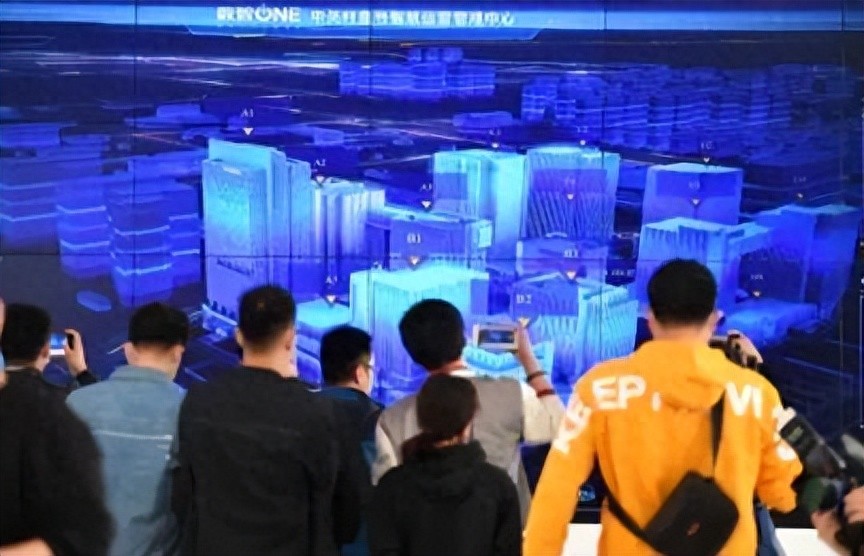
Innovation and Core Technology Development
Breakthroughs in core technologies are the key driving force for AI development. Beijing prioritizes tackling key core technologies, focusing on the entire AI industry chain, and has begun to establish a self-controlled full-stack technology system. Efforts are underway to address critical issues in computing chips and advanced storage, with leading enterprises like Cambricon Technologies and Moore Threads making significant progress in domestic chip performance. The unified open-source system software stack for various AI chips, “Zhongzhi FlagOS,” enables cross-chip operation and resolves industry challenges related to incompatible chip interfaces. Companies like Beijing Silicon-based Flow Technology Co., Ltd. provide solutions to reduce costs and improve efficiency in large model training and deployment. Leveraging high-quality research resources from institutions such as the Beijing Academy of Artificial Intelligence, the city has taken the lead in developing large model routes, forming comprehensive innovation advantages in areas like large language models, multimodal intelligence, and embodied intelligence. A total of 216 large models have been filed with the Central Cyberspace Administration of China, accounting for nearly 30% of the national total. Models such as Douyin Doubao and “Zhipu GLM” have topped global rankings in video generation.
Beijing Galaxy General Robotics Co., Ltd. released the first end-to-end embodied grasping model, while the Beijing Humanoid Robot Innovation Center launched the world’s largest and most powerful open-source embodied multimodal model, “Pelican.” The Beijing Science Intelligence Research Institute has introduced the world’s first AI-driven scientific research platform, “AI4S,” covering literature, computation, experiments, and multidisciplinary collaboration, leading to the emergence of various intelligent platforms.
Application and Industry Empowerment
Application-oriented approaches are the primary pathway for transforming AI technology into productive forces. In 2024, Beijing will launch the “AI+” action plan, focusing on education, healthcare, and culture to create benchmark application projects across ten major industries, accelerating AI empowerment in various sectors and forming a virtuous cycle of application, innovation, and industrialization. In the industrial sector, efforts are being made to embed AI throughout the manufacturing value chain, implementing the “New Intelligent Manufacturing 100” project, which aims to cultivate five lighthouse factories and 19 excellent intelligent factories. The “Yangmei Industrial” intelligent platform has achieved breakthroughs in multiple key industries, promoting the intelligent upgrading of industrial production. The BOE display industry model covers the entire production chain, and Xiaomi’s automotive factory has achieved over 99.9% accuracy in quality inspection, with 100% automation in key processes.
In healthcare, 27 projects have been recognized by the Ministry of Industry and Information Technology and the National Medical Products Administration for AI medical device innovation. The city has established 119 internet hospitals. In transportation, a 600 square kilometer high-level autonomous driving demonstration area has been built, with over 48 million kilometers of autonomous driving testing completed, accelerating the automotive industry’s transition to electrification and intelligence. The “Beijing MaaS” green travel digital practice has been included in the UN’s “2025 Global Sustainable Transport Best Practices Collection.” In public service, a national-level legal model innovation platform has been created to empower courts nationwide with AI. The Beijing High People’s Court’s “Smart North Law” platform has implemented three AI innovations to enhance trial execution efficiency. In the cultural sector, the Beijing “AIGC” audiovisual industry innovation center has been established, and the Beijing International Film Festival’s “AIGC Film Unit” has become the world’s first film festival unit co-created with AI, collecting over 2,000 works.

Infrastructure Support and Resource Optimization
Infrastructure is a crucial guarantee for the development of the AI industry. Beijing is advancing the construction of digital infrastructure, including computing power and data, based on industrial development needs. A special implementation plan has been introduced to build a comprehensive and multi-level infrastructure support system. In terms of computing power infrastructure, the city is coordinating the development of a collaborative layout for computing power in the Beijing-Tianjin-Hebei region, creating a foundation that integrates information computing power, network carrying capacity, and data storage capacity. The construction of intelligent computing centers is being promoted to meet the training computing power needs of large model enterprises. A computing power voucher subsidy policy has been implemented to help companies reduce computing power leasing costs. Since 2023, the city has issued over 700 million yuan in computing power subsidies, supporting nearly 100 enterprises in reducing computing costs by over 15%.
Efforts are being made to promote the interconnection of computing power and the construction of operational service platforms, integrating public computing power and high-quality social computing power in the region to form an efficient computing resource utilization system. In terms of data resources, the city is focusing on promoting data resource circulation and trading, improving data trading mechanisms. By 2025, the Beijing International Big Data Exchange is expected to achieve an additional 131 million yuan in on-site transactions, with high-quality AI data set transactions doubling. A demonstration reward policy for the data element market has been implemented to encourage enterprises and institutions to participate in data element market construction. By 2025, support for 66 data assets for initial registration and 54 data products for initial trading is expected to generate contract amounts of 467 million yuan, facilitating the entry of 42 data assets into the market. The first national AI data training base has been put into operation, creating a data application development platform and a “one-stop toolbox.” Guidance is being provided for the construction and operation of data labeling bases to gather ecological enterprises and provide compliant, high-quality data support for model training.
Resource Aggregation and Industrial Ecosystem Enhancement
The AI industrial ecosystem is a key support for building regional competitiveness. Beijing adheres to the collaborative development concept, focusing on building industrial collaboration platforms and improving the upstream and downstream linkage mechanisms of the industrial chain. The city is uniting government, enterprises, and research institutions to create a positive interactive and collaborative AI industrial ecosystem. Strengthening collaboration between industry, academia, and research, Beijing aims to cultivate top AI talent, promoting deep cooperation between universities like Tsinghua University and Peking University and enterprises, focusing on core technology breakthroughs and talent cultivation to form a complete innovation chain from basic research to technology development and industrial transformation. A financing service system has been improved, closely cooperating with venture capital institutions to establish a city-level AI industrial investment fund with a scale of 10 billion yuan, attracting hundreds of billions in social capital.
The city has initiated the “Beijing General AI Industry Innovation Partner Program,” gathering over 280 partner enterprises across five fields: computing power, data, models, applications, and investment. Through activities like enterprise matchmaking and project roadshows, the program identifies scene requirements, facilitates project cooperation, and promotes ten capability projects, resulting in nearly 200 typical cases of large model industry applications and promoting 20 “Beijing solutions” globally. The city is also focusing on building a batch of AI innovation districts, centered around Haidian District, forming a distinctive layout of “one core and multiple points,” with innovation landmarks like the “AI Origin Community” and “Modular World” in the Economic Development Zone.
Governance and Safety Measures
Safety governance is a prerequisite for the healthy and orderly development of the AI industry. Beijing emphasizes the importance of development and regulation, striving to improve the AI industry governance system, strengthen safety supervision, and promote the coordinated advancement of technological innovation and safety assurance. The establishment of the Beijing Institute for Advanced AI Safety and Governance is underway, supporting the construction of safety evaluation and protection service platforms for large models, and formulating multiple AI governance safety standards to enhance the controllability of large models. The construction of the Beijing AI data training base is being deepened, gathering 145 high-quality datasets from the industrial and information sectors, and establishing embodied intelligence data collection factories to provide compliant data support for model training. An AI data sandbox mechanism has been established to effectively reduce risks related to data ownership faced by enterprises during model training. Support is being provided for enterprises to build model safety testing grounds, formulate safety and performance evaluation standards, and conduct assessments of models and intelligent agents, creating a multi-dimensional risk assessment system for large models. Strengthening network and data security guarantees, enhancing risk monitoring and safety supervision, and building a governance system that is human-machine symbiotic, safe and controllable, intelligent and benevolent, and open and inclusive.
Future Outlook
Looking ahead, Beijing aims to establish itself as a benchmark city for the global digital economy, targeting the position of “the world’s leading AI city” and planning to create a new trillion-level AI industry, continuously promoting high-quality development in the AI sector.

Focusing on leading the industry, Beijing is committed to achieving a high-quality leap in the AI sector. By adhering to innovation-driven principles, the city will promote continuous expansion of industry scale and improvement in development quality. Support will be provided to leading model enterprises to accelerate technological iteration, continuously producing internationally influential original results and consolidating Beijing’s leading position in the large model field. Efforts will be made to accelerate the empowerment of new industrialization through AI, creating benchmark projects in industries like integrated circuits, automotive, and equipment, and achieving more intelligent applications in core manufacturing scenarios. The city will also accelerate the iteration and innovation of intelligent products and equipment, advancing the development and application of next-generation intelligent terminals like humanoid robots and brain-computer interfaces. The “AI+” action plan will be implemented to enhance the penetration of AI in education, healthcare, and other livelihood sectors, while cultivating new economic growth points in fields like AI-generated content (AIGC) and software programming. The AI ecosystem main platform of the partner program will be developed, improving systematic service capabilities for supply-demand matching and open-source, promoting the collaborative development of the upstream and downstream of the industrial chain, and continuously strengthening the industrial development ecosystem.
The city will enhance its computing power layout, constructing a high-quality computing power support system. Adhering to the principles of “serving innovation, moderate foresight, dynamic demand, and green development,” Beijing will continuously improve its computing power infrastructure layout, building a cross-domain collaborative computing power supply system. The “Galaxy Computing Corridor” project will be optimized, accelerating the construction of an integrated computing power network in the Beijing-Tianjin-Hebei region and the western regions, forming a nationally leading interconnected computing power operation service system. A gradient computing power layout of “super nodes + industry nodes” will be established, guiding diverse entities to build in a moderately advanced manner, forming a collaborative, functional, and diverse computing power supply construction system. Efforts will be made to enhance the performance of domestic AI chips, strengthen core technology breakthroughs in ultra-large-scale intelligent computing clusters, promote the construction of an independent intelligent computing ecosystem, and improve the capability of self-sufficient computing power. Additionally, policies like computing power vouchers will be continuously optimized to reduce computing costs for enterprises.
Data empowerment will be deepened, enhancing the level of data development and utilization. Targeting the development needs of AI enterprises, efforts will be made to promote the market-oriented allocation of data elements. The city will strengthen the overall coordination of dataset resources, focusing on building high-quality datasets in key areas like embodied intelligence and intelligent connected vehicles. The influence of data sandboxes will be expanded, enriching data policy tools, and planning the implementation of new AI data voucher policies to support the construction of high-quality datasets and their application by model enterprises, thereby reducing the costs of data construction and utilization. The capabilities of the Beijing International Big Data Exchange will be continuously enhanced, improving data trading mechanisms, expanding the scale of data transactions, and promoting the orderly flow and efficient utilization of data resources. The development of supporting industries like data labeling and data governance will be strengthened to cultivate a data service ecosystem and enhance data service capabilities.
Finally, the governance system will be improved to ensure the safe and orderly development of the industry. Coordinating development and safety, Beijing will accelerate the improvement of the AI safety supervision system and legal regulations, establishing a sound AI governance system. A tiered and classified supervision mechanism will be established, implementing differentiated supervision based on the risk levels of different AI technologies and applications, enhancing the precision and effectiveness of regulation. The resilience of AI systems against attacks and disturbances will be improved, and ethical review and risk prevention and control systems will be established, strengthening the supervision of the entire process of AI technology application. Support will be provided for relevant institutions to formulate and improve AI governance safety standards, promoting the construction of a standard system to guide the regulated development of the industry. Beijing will actively participate in the formulation of international standards and international governance cooperation, sharing its governance experiences and enhancing China’s discourse power and influence in AI governance, providing an open and safe “Beijing solution” for global AI development.
Comments
Discussion is powered by Giscus (GitHub Discussions). Add
repo,repoID,category, andcategoryIDunder[params.comments.giscus]inhugo.tomlusing the values from the Giscus setup tool.