Introduction
Recently, I became fascinated with AI-generated short films. Initially, I aimed to distinguish between AI and real actors, but I ended up binge-watching them all night.
With the launch of SeeDance 2.0, AI video generation technology has become so advanced that it’s nearly indistinguishable from real-life footage, causing anxiety in the film industry about being replaced by AI.
How Powerful is SeeDance 2.0?
Let’s compare the capabilities of SeeDance 2.0.
Previously, the main characters in AI short films looked like this:
 Although they simulated real people to a large extent, the overall appearance was still quite stiff, especially regarding skin texture and facial expressions, often leading to the uncanny valley effect.
In contrast, here is a character generated by SeeDance 2.0:
 The skin texture is visible, and facial expressions and muscle movements are much smoother, even showing subtle imperfections and wrinkles. The changes in facial muscles while speaking and the nuances around the eyes are clearly visible.
This is a kissing scene from earlier AI short films:
 The continuity of character movements was poor, with noticeable awkwardness when the actors’ noses touched and then separated, creating a bizarre visual effect.
In contrast, here is a kissing video I generated using SeeDance 2.0:
 While the detail of the characters’ noses colliding still needs improvement, overall, it resembles a real performance much more closely, with emotional expressions in their eyes.
In terms of special effects, earlier AI short films were already impressive but still had a cheap feel.
 The special effects generated by SeeDance 2.0 show significant improvement compared to previous AI short films, akin to upgrading from a low-end car to a luxury model.
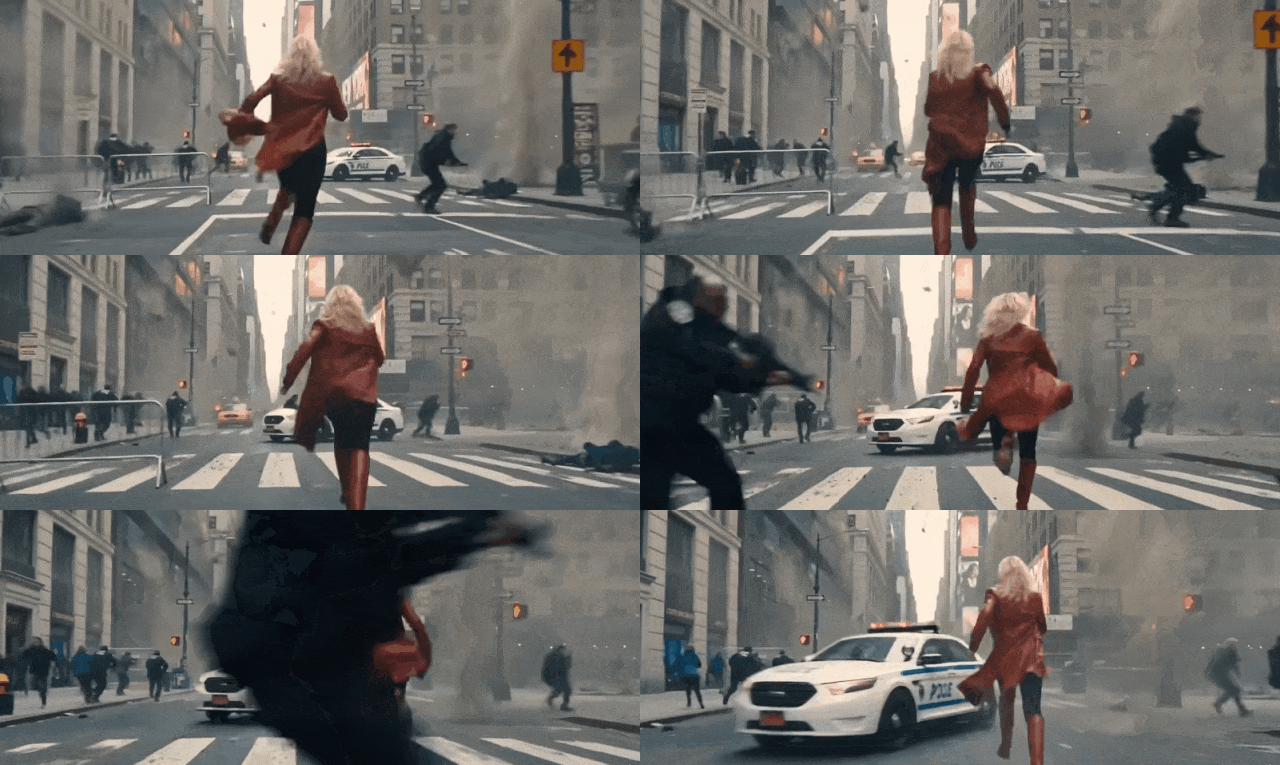
The most significant improvement in SeeDance 2.0 lies in its ability to handle storyboarding. It can automatically break down a sentence or story into professional cinematic narratives during the input phase.
For example, when generating a scene with two women and one man posing at the beach, previous AI short films only showed the three standing together awkwardly. In contrast:
 This video generated by SeeDance 2.0, based on a simple prompt, automatically assigned actions and performances to the characters, complete with music and dialogue.
 The entire video feels like a real-life scenario, eliminating the artificiality of AI.
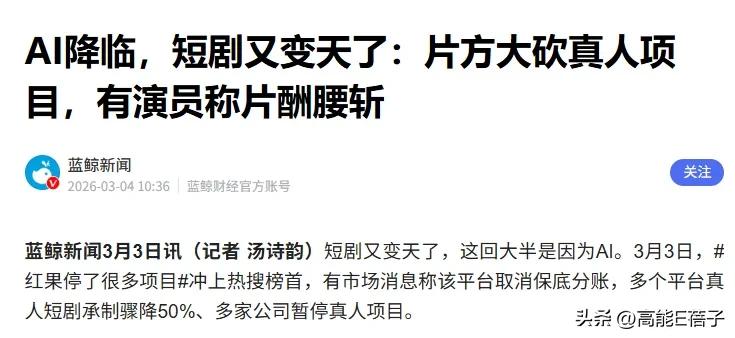
While SeeDance 2.0 is visibly advanced, traditional film and television still rely on the star power of actors, making full AI replacement challenging. However, for the already AI-generated short film industry, this represents a seismic shift. Reports indicate that platforms are cutting back on short film projects, with some companies halting live-action projects altogether.
The Limitations of AI
Despite its strengths, we shouldn’t panic about AI just yet; it hasn’t reached the point of completely reshaping the industry. A clear indicator is that SeeDance 2.0 was in beta testing on February 7 and officially launched on February 13. If the concept of a ‘one-person crew’ were truly feasible, we would see a flood of content by now, but the silence suggests challenges remain.
AI is not incapable of replacing humans; it is simply in a transitional phase, much like how early cars couldn’t outperform horse-drawn carriages.
The evolution of technology is rarely linear, and while AI video capabilities are advancing, several limitations persist. Issues such as narrative coherence, simulation of complex physical interactions (like fighting or collisions), and environmental modeling still need resolution.
Especially after rumors that SeeDance 2.0 has been ‘dumbed down,’ many users have noted a decline in performance.
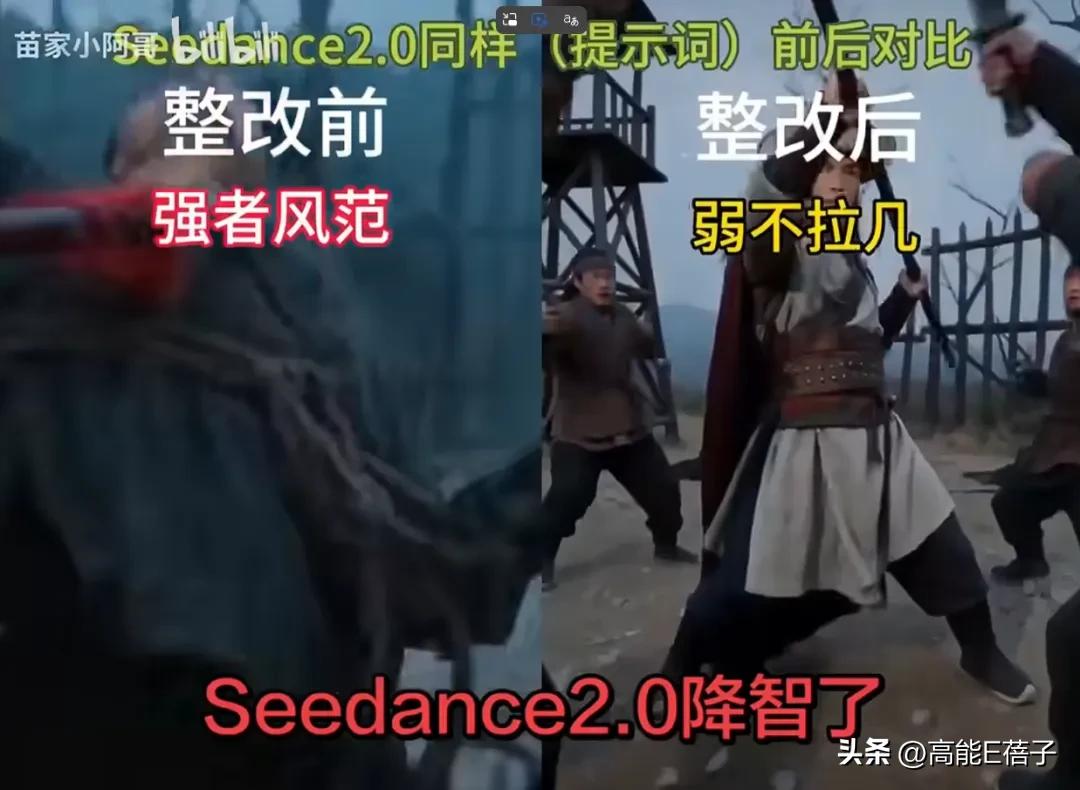
When creating personal videos, one might find AI to be incredibly powerful, as these typically involve generating single pieces without high expectations.
However, when applied to short films and other media productions, AI must maintain consistency across multiple videos and generate content precisely according to creator instructions, which it currently struggles to achieve.
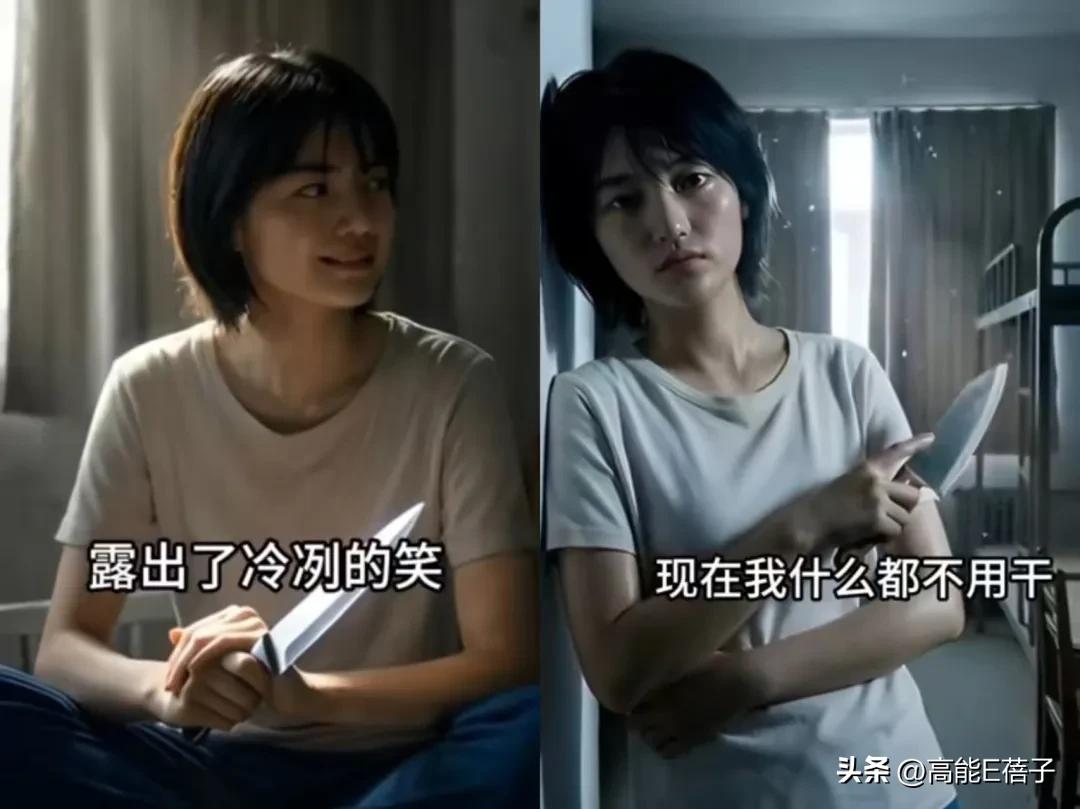
Many users have discovered that AI-generated videos often feel like ‘opening a blind box’; feeding the same prompt into the same AI can yield vastly different results.
This inconsistency is why characters in the same AI-generated series may have consistent makeup but varied appearances, even differing significantly from different angles:
Production efficiency is not as high as anticipated; AI-generated short films can take 5-10 days to produce, while traditional live-action short films also take about the same time. New technology hasn’t necessarily sped things up and can sometimes lead to longer wait times due to platform delays.
Currently, the queue time for video generation on the Jiemeng platform exceeds six hours, demonstrating the need for further technological iterations.
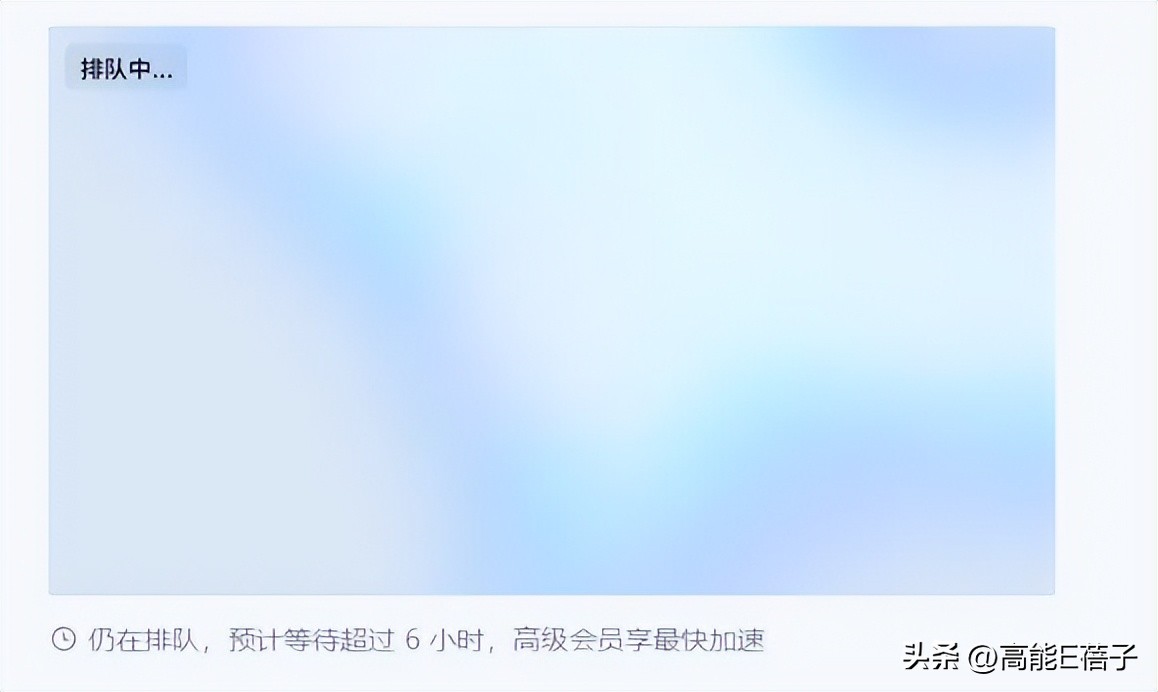
The greatest impact of AI on the industry is psychological. As fear spreads, platforms and investors may reduce their investments in short films to support AI, which can materially affect the short film industry.
If platforms and investors shift their focus to AI, which industry will remain unaffected? Perhaps the struggling long-form series and films?
Before the launch of SeeDance 2.0, there were already claims that ‘90% of production teams are losing money’ in the short film sector. This is unsurprising, as the production logic for short films relies on mass production and high investment in marketing; hitting one viral hit among ten short films can recoup costs.
In fact, marketing can account for up to 80% of the production costs. The model of ‘producing a batch of content, marketing, and calculating overall revenue’ is not a healthy content production strategy and does not align with conventional logic driven by content. It merely capitalizes on the short film boom.
AI’s emergence has accelerated the decline of the ‘short film marketing model.’ However, will the lower barrier to entry for AI films further degrade user aesthetics and intelligence? Or will it prematurely end the marketing model for short films, potentially leading to a capital cycle of ‘AI production - AI marketing - AI viewing’? Only time will tell.
Legal and Ethical Hurdles for AI
Another reason AI video production cannot fully accelerate is the ongoing discussions around AI ethics and legalities. On February 26, actor Wang Jinsong expressed on Weibo that he had been infringed upon, sharing an AI-generated video that used his likeness without permission, stating, “It’s terrifying; the voice and lip movements are indistinguishable from reality.”
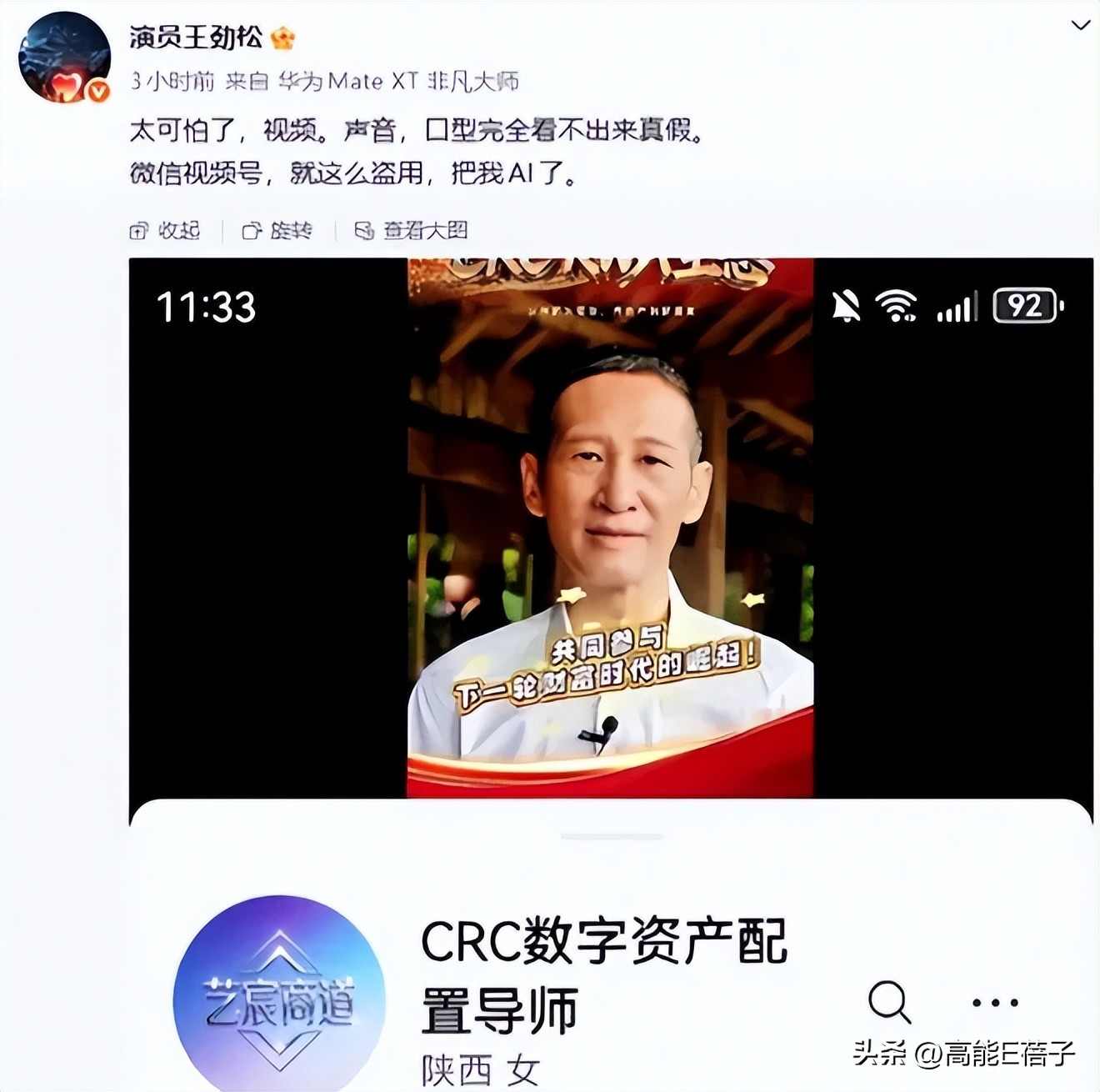
He later shared a screenshot showing that the video was removed after his complaint.
However, he also expressed concerns about the legal implications of AI videos, noting that while he previously thought “fake is fake,” he now feels unprepared, and the consequences for infringers are negligible. How can we ensure that such actions aren’t used to exploit legal loopholes, especially if they lead to fraud?
Just two days after the Jiemeng platform launched, it swiftly removed the feature that used real human likenesses as reference points, indicating a cautious approach.
A friend of mine, a traditional screenwriter who has worked on several high-budget dramas, recently transitioned to creating AI short films. He expressed frustration over the Jiemeng platform mistakenly flagging his generated characters as real likenesses, questioning whether he could continue his work.
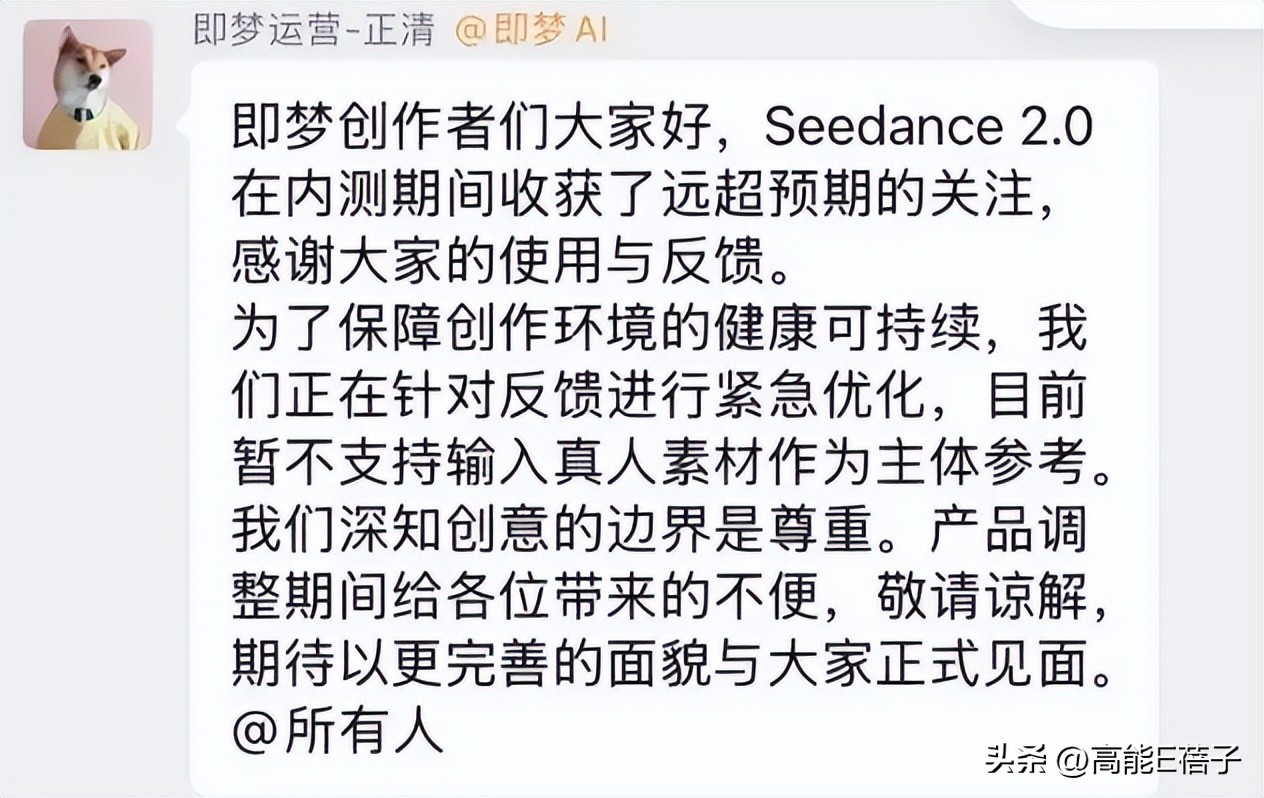
The system’s cautiousness regarding real likeness usage stems from ongoing copyright disputes and the lack of legal clarity surrounding AIGC, which poses significant obstacles to commercial production.
Many directors wonder if AI could safely generate action scenes or stunts without using real actors’ likenesses. However, AI remains hesitant, fearing the repercussions of using actors’ images, raising questions about whether the barriers set for copyright protection and societal safety are hindering human-AI collaboration.
This dilemma is a new challenge for industry professionals and a contradiction that the entire content industry cannot avoid.
Conclusion
Even if AI technology achieves breakthroughs, it will only enhance efficiency in task completion on a technical level. The core of film and television works lies in emotional depth, which remains unchanged in both short films and traditional media.
AI can generate impressive storyboards and convincingly simulate real actors, but the creativity, aesthetics, and narrative direction behind them will always be controlled by humans, a capacity that AI cannot replace.
Instead of succumbing to anxiety over AI’s emergence, we should focus on how to create stories that resonate emotionally with audiences.
Technology will continue to evolve, but the ability to move people will always rest in the hands of those who can observe and express.
Comments
Discussion is powered by Giscus (GitHub Discussions). Add
repo,repoID,category, andcategoryIDunder[params.comments.giscus]inhugo.tomlusing the values from the Giscus setup tool.